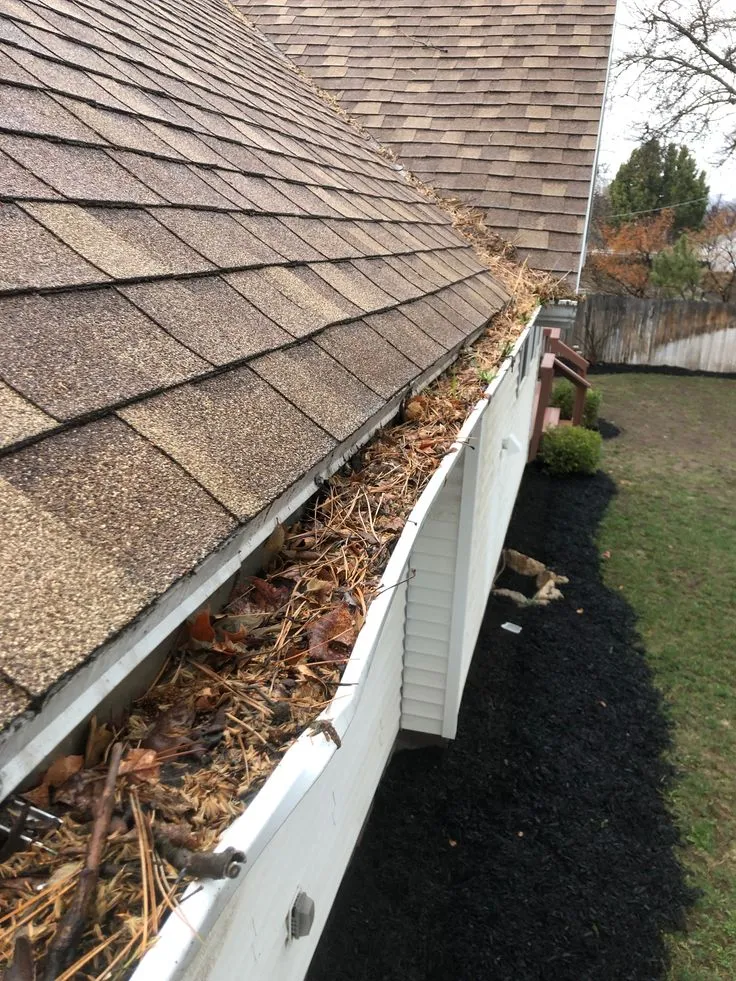
The afternoon storm rolls in, and instead of hearing water rush down the downspouts you see it sheeting off the front edge of the roof like a waterfall. It is one of the most common gutter complaints in Southwest Florida, and the question is always the same. Why do my gutters overflow when they are supposed to catch the rain? The short answer is that one of four things is going on. The gutter is blocked, it is pitched the wrong way, it is too small for the roof or downspouts feeding it, or a roof valley is throwing water past it. The useful part is that each one tends to spill in a different place.
Start with where the water escapes
Next time it rains steadily, step outside or stand at a window and watch the roof edge for a few minutes. Where the water gets out tells you more than any guess made on a dry day.
| Where it spills | What it usually points to |
|---|---|
| Along the whole length of the run | A blockage, or more water than the gutter and its downspouts can carry |
| One spot in the middle of a run | A sagging section or a pile of debris that holds water in place |
| The end farthest from the downspout | Pitch running the wrong way, or one downspout trying to drain too long a run |
| An inside corner below a roof valley | Fast water from two roof slopes jumping over the front lip |
| Right above a downspout | A clog in the downspout or its elbow, not the gutter itself |
| Behind the gutter and down the fascia | Not true overflow. Water is getting between the gutter and the roof edge |
Two patterns at once are common. A long run can be both clogged and short on downspouts, so clearing it helps but does not end the problem. Keep that in mind before deciding a single fix will cover everything.
Clogs, the usual first suspect
Most overflow starts with debris. Around here that means palm fronds and seed pods, oak leaves and the fine roof grit that settles in the bottom of the trough. A little debris slows the flow, and a thin layer of muck can hold enough water to tip a full gutter over the edge once a downpour starts.
The downspout is the part people forget. The elbow at the top, where the gutter outlet turns down the wall, is the tightest bend in the system and the first place leaves jam. If water is spilling right above a downspout and the outlet below is barely dribbling, the blockage is almost always in that elbow. Homes under heavy tree cover often stay ahead of it with gutter guards, which keep the larger debris out of the trough and the downspout in the first place.
When the gutter is pitched the wrong way
A gutter is not supposed to be level. It needs a slight fall toward each downspout so water keeps moving. A common installation guideline is about a quarter inch of drop for every 10 feet of gutter. That is barely visible from the ground, which is why a gutter that has lost its pitch can look perfectly fine.
Pitch usually goes wrong in two ways. Hangers loosen over the years and let a section sag, creating a low pocket that fills first and spills first. Or the gutter was hung flat, or even sloped away from the outlet, so water collects at the far end. Standing water you can see in the trough a day after a storm is the giveaway, and it does more than overflow. It adds weight that pulls the hangers looser and gives mosquitoes a place to breed. Resetting the pitch and replacing worn hangers is standard gutter repair work and does not usually mean new gutters.
Too much roof for the gutter
If the gutters are clean and properly pitched and still spill along the whole run, the system may simply be too small for what lands on it. The National Weather Service describes the South Florida wet season, May 15 through October 15, as a stretch of near daily thunderstorms, with mid May through early July the stormiest part. Those storms do not deliver rain evenly. They dump a lot of it in a short burst, and that burst is what a gutter has to handle.

Two things decide capacity. The first is gutter width. A 5 inch gutter suits a small porch or lanai roof, while most single family roofs here are better served by 6 inch, and large or tile roofs sometimes call for 7 inch. The second is downspouts. A long run that empties through one downspout at the far corner forces every gallon to travel the full length before it can leave. Adding a downspout partway along, or switching to larger downspouts, often fixes overflow without replacing the gutter at all.
Valleys that throw water past the gutter
Where two roof slopes meet, the valley between them collects water from both and sends it down a narrow channel. By the time it reaches the edge it is moving fast, and in a heavy storm it can shoot straight over the front of the gutter at the inside corner. Tile and steep roofs make this worse because water leaves them quickly.
The usual fix is a splash guard, a short raised piece fastened to the front lip of the gutter where the valley lands. It catches the water and turns it back into the trough. If the valley carries more than a guard can contain, a downspout placed right at that corner gets the water off the roof edge before it builds up.
Water running behind the gutter is a different problem
Sometimes what looks like overflow is water dripping down the face of the fascia from behind the gutter. That happens when there is a gap between the roof edge and the back of the gutter, or the gutter has pulled away from the house. It deserves quick attention because that water soaks straight into the fascia board. Soft or stained fascia behind a gutter usually means it has been happening for a while.
What you can check safely and when to call someone
Most of the diagnosis can happen from the ground. During a steady rain, note where water escapes and whether each downspout is pouring or barely dripping. After the rain, look for drip lines in the sand, splash marks on the lower wall and any section of gutter that sits visibly lower than its neighbors. A photo or two of the problem spot while it is happening is genuinely useful to whoever comes to look.
Anything that means climbing is better left to someone with the right ladder and footing, especially on a two story home, a tile roof or near power lines. If you are weighing whether the house should have gutters on every side in the first place, our guide on whether Florida homes need gutters covers that decision. And if the overflow turns out to be a capacity problem, a properly sized seamless gutter system with enough downspouts is the long term answer.
More overflow questions
Can overflowing gutters damage a house?
Yes, mostly through where the water ends up. Repeated overflow can wash sand out along the slab, stain and wear stucco, rot fascia boards and leave standing water near doors and the lanai. Water that sits in a sagging gutter also adds weight, which loosens hangers over time and makes the overflow worse.
Do gutter guards stop overflow?
They stop the overflow that comes from leaves and palm debris filling the trough. They do not add capacity. If a gutter is too small for the roof above it or drains through too few downspouts, it will still spill in a hard storm with a guard on top.
Is some overflow normal in a really heavy storm?
A brief spill during the heaviest minutes of a cloudburst can happen even on a well built system. What is not normal is overflow in an ordinary afternoon storm, or water escaping at the same spot every time it rains. That pattern points to something that can be fixed.
How can I check my gutters without climbing a ladder?
Watch them from the ground or a window during a steady rain. Note where water spills, whether each downspout is gushing or barely dripping, and whether any section looks lower than the rest. Afterward, look for drip lines and washed out sand below the roof edge. Leave anything above the first rung to a professional.
Sources
- The Home Depot, How to Install and Replace Rain Gutters (recommended slope) (opens in a new tab)
- National Weather Service Miami, Rainy Season 2025 Outlook (opens in a new tab)
- Florida Department of Health in Hardee County, mosquito prevention (gutters as breeding sites) (opens in a new tab)
- InspectAPedia, gutter defects and valley overshoot (opens in a new tab)